

How To Understand The Technical Parameters Of Road Light Poles
Jun 12, 2026
Leave a message
Knowledge of technical parameters is the key to controlling quality and matching scenarios for the selection, inspection, and design of road light poles. The parameters are complicated, and many practitioners are prone to confusion. This article is divided into three main sections, and Phoebus will lead you to clearly interpret various core indicators and quickly master parameter identification methods.
A. Basic parameters of the pole body, deciding the matching specification
1. Height & taper
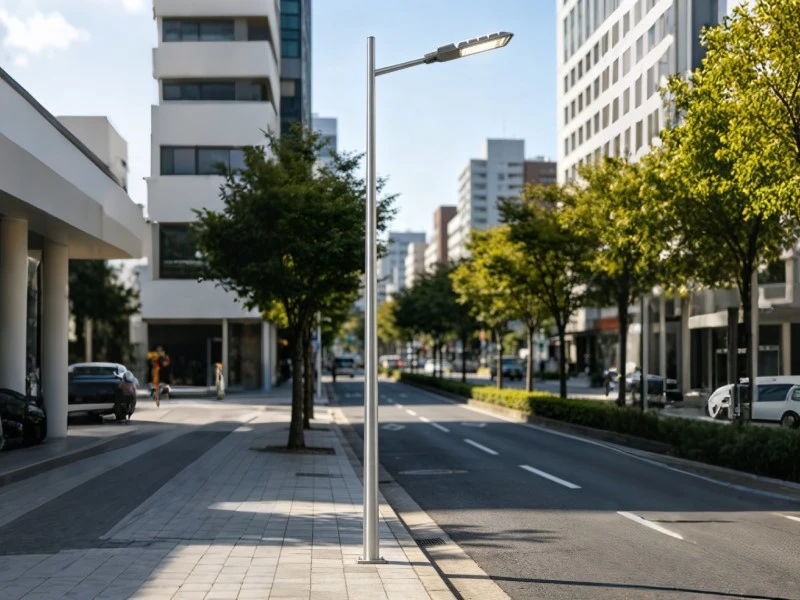
The height of the lighting pole for street is the primary parameter. The height of a general road lamp pole is 4-12 meters, and it is generally used at 4-6 meters in residential areas and on the sidewalk. Priority is given to urban trunk roads and highways at 8-12 meters. Taper is the difference in diameter between the upper and lower parts of the pole body. The national standard road light poles are often designed with an overall taper, and a reasonable taper can improve the overall stability. Road light poles with straight shafts are normally non-tapered and are mainly used for lighting in courtyards. When buying, the height should be selected according to the road width and the lighting range.
2. Caliber and wall thickness
The shape and load-bearing capacity of the lamppost are determined by the upper and lower diameters of the aperture. The wall thickness is directly related to the wind resistance and the compressive strength. The common wall thickness of outdoor municipal street lamp posts is 2.5-4 mm, and thicker ones are recommended for windy and open road sections. The wall thickness of the lighting pole for street is not enough, which is easy to bend and deform. It is an important basis for identifying product quality.
B. Service life is determined by material and process parameters
1. Main material
The mainstream material on the market is Q235 low-carbon steel, with the advantages of high cost performance, stable strength, and universal choice for engineering.
2. Surface treatment process
The anti-corrosion process is the core of outdoor road lamp post components, usually hot-dip galvanizing+outdoor spraying. The hot-dip galvanized layer should be up to the standard thickness, and can isolate the water vapor, so as not to rust. Spray coating determines the appearance and weather resistance. High-quality plastic layers have strong adhesion and are not easy to fade or peel. Lighting pole for street that is only painted have poor anti-corrosion ability and is not recommended for long-term outdoor use.
C. Structural components and parameters, installation and safety controls
1. Embedded parts and flanges
The base that connects the road lamp post to the ground is called the flange. Its parameters are the following: flange size, number, and diameter of bolt holes. The larger the size, the more standardized the bolt configuration, and the more stable it is after installation. The pre-embedded parts are required to match the flanges, and a parameter mismatch may lead to construction failure. Matching specifications must be confirmed at purchase.
2. Arm
The cantilever is divided into single-arm, double-arm, and high-and-low arms; the parameters, such as arm length and extension angle, directly affect the illumination range of the lamp. Load parameters are the weights of the lamps, monitoring devices, and circuits that the lamp post can bear. The multifunctional comprehensive pole should be carefully checked for loading to prevent safety hazards caused by overloading.
With the above parameters, the road lamp post can be accurately selected and inferior products can be avoided, and it can adapt to different outdoor scenarios.
Wholesale/customize various types of road lamp posts with Phoebus.