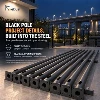

Conical street light poles are one of the most popular products for global urban lighting and road infrastructure projects. For lighting manufacturers and overseas buyers, proper container loading planning plays a vital role in the whole supply chain. A well-planned loading scheme can maximize container space utilization, lower sea freight cost, prevent surface scratches, bending and structural damage of poles, and guarantee smooth delivery for on-site installation. Without reasonable loading arrangements, conical poles may shift during transit, suffer galvanized or powder coating damage, or even cause unstable weight distribution inside the container, which brings extra risks for ocean shipment and customs handover.
The first step is to collect and verify all core product parameters before loading. You need to confirm the total quantity, pole length, top diameter, bottom diameter, wall thickness and unit weight of each conical street light pole. It is also necessary to check whether there are extra accessories such as lamp brackets, anchor bolts, flanges and wiring parts. Based on these data, choose the right container type. Standard 20GP or 40GP dry containers work for poles within regular length limits. For extra-long conical poles that cannot fit into closed dry containers, flat rack containers are the better choice. Wrong container selection will lead to failed loading or expensive over-length surcharges from shipping lines.

Next comes the stacking layout for conical poles. Since these poles are tapered, one end is wider while the other is narrower. The most space-saving method is to arrange them alternately: place the wide end of one pole opposite the narrow end of the next. This staggered arrangement fills empty gaps between poles and improves loading density. Wooden dunnage and soft protective pads must be placed between every layer. These buffers avoid direct metal-to-metal friction, protecting the anti-corrosion galvanized layer and outer powder coating from scuffs and chipping. Do not stack poles too high beyond the safe load limit of the container.
Secure fixing and balanced weight distribution are another critical point. All bundled poles should be fastened with heavy-duty lashing straps and wooden bracings. The bundles must be locked firmly so they will not slide or roll when the ship sails through rough waves. Never concentrate all heavy pole bundles on one side of the container. Uneven weight will affect container stability and may be rejected by shipping carriers. Keep heavier bundles spread evenly across the floor, and place lighter bundles on the top position.
Loose accessories deserve separate packing and clear marking. Brackets, bolts and small hardware should be packed into solid cartons. These cartons can be placed in leftover gaps between pole bundles to use spare space. Every carton and pole bundle needs visible labels, including item description, quantity and mark number. This helps overseas receivers quickly sort goods and speeds up inspection when the cargo arrives at the port.
Before closing the container door, prepare a complete loading list. The document records package marks, quantities, net weight, gross weight and dimensions of every bundle. This list supports customs declaration, cargo checking and project receiving.
Good container loading planning is a simple but important link for conical street light pole orders. It cuts unnecessary loss, stabilizes shipping cost and helps both manufacturers and buyers finish lighting projects on schedule.When there are a large number of lamp posts, it is necessary to make rational use of the space. Under the condition that the weight is within the cabinet's limit, loading more items in each container can also help customers save costs.