

What Should Be Checked on Street Light Pole Drawings Before Production?
Oct 10, 2026
Leave a message
Accurate drawing validation is the prerequisite for high-quality street light pole manufacturing. As customized street lighting becomes widely adopted in urban infrastructure, tiny design errors may lead to defective poles, rework, project delays and installation troubles. Manufacturers agree that careful drawing review before production is essential to ensure safety, stability and compliance with project requirements.
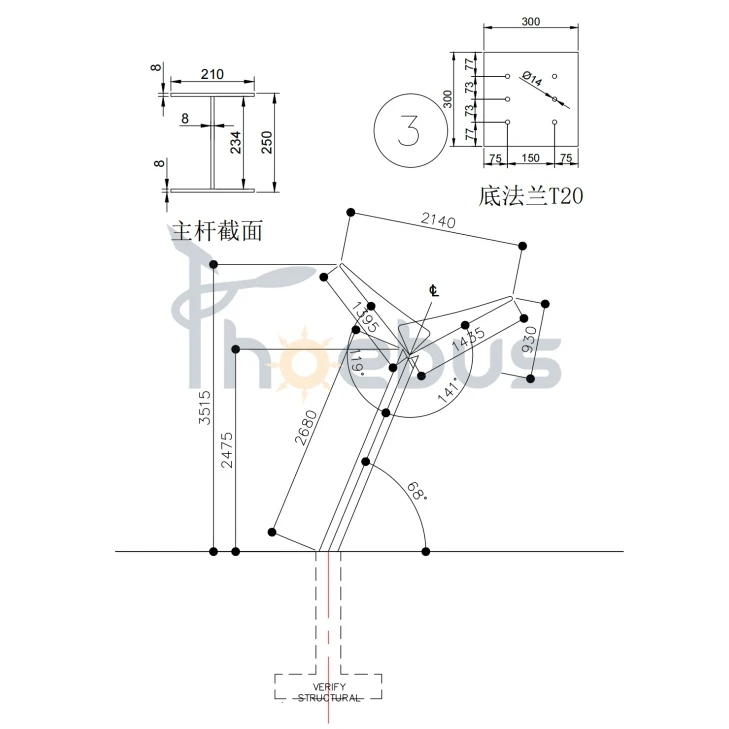
Below are key checkpoints for street light pole drawings:
Dimensions and structure
Verify total height, wall thickness, taper, pole shape and lamp arm length. All measurements must match site conditions and lighting standards. Even small size errors affect stability and lighting effects.
Material and load requirements
Check marked steel grade and mechanical properties. Confirm wind load design meets local codes and international standards such as EN 40 and AASHTO. Extra reinforcement is required for coastal, high-altitude or strong-wind areas.
Base plate and foundation fit
Check base plate size, thickness, anchor bolt hole diameter and spacing. These parameters must align with foundation drawings. Handhole location and size also need confirmation for wiring and maintenance.
Welding and surface treatment
Review welding standards, plus anti-corrosion finish requirements including hot-dip galvanizing or electrostatic powder coating. Proper surface treatment protects poles from rust and weathering.
Lamp bracket and electrical layout
Ensure lamp arm interfaces fit the selected light fixtures. Check reserved cable holes and space for electrical parts. For smart poles, verify space for sensors, dimming modules and surge protection.
A full drawing check removes most production and construction risks. As an experienced custom street light manufacturer, we carry out strict drawing validation before production, supplying reliable, compliant light poles for global customers.