

Origin Of Powder-Coated Streetlight Poles
Dec 18, 2025
Leave a message
In terms of practicality and urban adaptability, the introduction of powder-coated streetlight poles effectively addresses the major issues of previous generations. Following powder coating, streetlight poles effectively reduce wrinkles, drips, zinc nodules, peeling, spots, and uneven coloring, resulting in a smooth, visually appealing surface.
Evolution of Street Light Poles
In order to prevent corrosion, wooden streetlight poles were constructed in the 1950s using Northeast China pine and covered in asphalt. Despite being sturdy and reasonably priced, they were heavy, challenging to install and maintain, and had an uninteresting appearance that went against the city's reputation.
During the 1960s and 1970s, cement streetlight poles became more and more popular as an economical, aesthetically beautiful, and resource-efficient alternative to wood. However, they had fatal defects that shortened their lifespan, including poor impact resistance, susceptibility to collapse and breakage, challenges with handling and transportation, and the surface mortar's tendency to weather and peel after prolonged exposure to the sun and rain.
After China's reform and opening up, steel lampposts made of welded galvanized steel pipes initially appeared. They were sturdy, durable, and lightweight despite the simple galvanizing process's insufficient resistance to corrosion and weather. Steel poles were susceptible to rust and corrosion, especially in humid coastal regions and areas with acid rain. The major issue of coating peeling resulted in costly maintenance.
Due to urban development at the time, streetlights had to have three features: a longer lifespan, less maintenance, and an improved appearance. Powder coating technology was made possible by the inability of traditional surface treatment methods (painting, simple galvanizing, and asphalt immersion) to satisfy these demands.
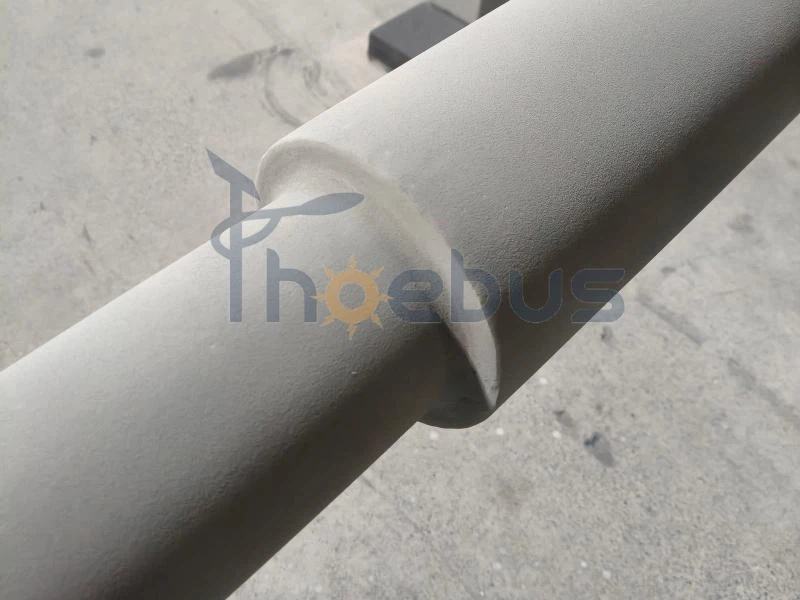
Powder coating (electrostatic powder coating), as a key surface treatment technology, laid the foundation for the upgrading of streetlights through its own maturity.
Electrostatic powder coating technology was first developed in the United States in the 1950s, and industrialized in Europe in the 1960s. In 1964, the melt extrusion powder production technology was introduced, enabling continuous mass production of powder coatings and making large-scale application possible.
From the mid-1970s to the early 1980s, China began developing powder coating technology. The Ministry of Chemical Industry and the Ministry of Electronics Industry, among others, successively broke through key technologies such as epoxy powder coatings and electrostatic spraying equipment. In the 1990s, China officially introduced and improved powder coating equipment. The commercialization of epoxy resin powder promoted the popularization of the technology. Due to its advantages such as "energy saving, high efficiency, safety, environmental protection, and dense coating," the powder coating process gradually expanded from the home appliance and electronics sectors to the municipal facilities sector.
Chinese companies used the "hot-dip galvanizing + powder coating" combined process on steel street light poles in the 1990s. Hot-dip galvanizing first creates a rust-proof underlayer on the steel pole surface, and electrostatic powder coating then covers a dense powder coating, offering double protection and totally resolving the issue of steel pole corrosion. A patent for "integrated galvanizing and powder coating" street light pole processing had already been filed in China by 2003, outlining the fundamental role of powder coating in the manufacturing of street light poles.
The above information was provided by Phoebus, a street light pole manufacturer. Please contact us for more information if you are interested.