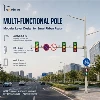

A smart streetlight is a public lighting fixture that incorporates technology, such as cameras, light-sensing photocells, and other sensors, to introduce real-time monitoring functionalities. Also referred to as adaptive lighting or intelligent street lighting, this type of lighting system is recognized as a significant step in the development of smart cities.

In addition to enabling cities to provide the proper amount of street light for local conditions, installing intelligent lighting will help improve citizen satisfaction regarding security and safety, while bringing municipalities significant savings in power consumption and lighting system maintenance. Plus, outdoor lighting infrastructure will serve as a backbone for a number of Internet of Everything (IoE) applications, such as monitoring weather, pollution, and traffic.
How do smart streetlights work?
The technology behind smart streetlights can vary depending on its features and requirements, but typically, it involves a combination of cameras and sensors. When implemented on standard streetlights, these devices can detect movement that enables dynamic lighting and dimming. It also allows neighboring fixtures to communicate with each other. If a pedestrian or car is detected, all surrounding lights will brighten until movement is no longer captured.
Additional capabilities of smart streetlights may require more technology, such as image sensors, seismic sensors, sound sensors, speakers, weather and water detection sensors, and wireless transmitters.
After smart streetlights are installed, most vendors offer software that can help cities monitor and manage the technology. This software can also be used to gather any data collected by the streetlights and adjust its features, such as dimming time.
Features of smart streetlights
While the features of smart streetlights depend on the specific technology used by city planners, examples of common functionality include the following:
dynamic lighting controls based on movement detection; environmental and weather monitoring; digital signage that can update as needed, such as parking regulations or accident alerts; parking management, such as alerting officials of illegally parked vehicles or drivers of open spaces; extended cellular and wireless communications; traffic management through real-time data feeds that track congestion and speed; and automatic emergency response in the event of a car crash or crime.
Benefits of smart streetlights.
Implementing smart streetlight systems offers the following advantages:
Reduced energy cost and usage with flexible dimming controls; increased pedestrian satisfaction through improved safety measures; lowered repair and maintenance costs with the monitoring software; reduced carbon emissions and light pollution; increased lamp life and shorter response times to outages; improved architectural planning based on real traffic patterns and insights; and increased revenue opportunities, such as leasing poles for digital signage or other services.
Software developers are creating apps using the data gathered by the streetlight Internet of Things (IoT) network. Emerging apps include one that identifies the quietest walking route; a "digital cane" for using traffic and location data to help visually impaired people cross the street; an app that enables food truck drivers to find locations with available parking spaces and high pedestrian traffic; and an app for identifying interesting events in real time.
If you need us to design a solution, pls feel free to send mail to seven@txlightinggroup.com or find me on whatsapp +86 18852751228. Thank you.