

How To Inspect Street Light Pole Straightness Before Shipment
Sep 22, 2026
Leave a message
For overseas street lighting projects, street light pole straightness is a frequently underestimated quality checkpoint. Even minor bowing or twisting of hot dip galvanized steel poles can create severe headaches upon arrival at construction sites: mismatched flange mounting faces, skewed lamp fixtures, distorted road lighting distribution, and full-batch rejection in worst case scenarios.
With over 25 years of outdoor lighting manufacturing and exporting experience, Phoebus Light executes standardized pre shipment straightness validation for all finished lamp poles within our 62,000 m² production workshop.
This article introduces our real world factory QC workflow for lamp pole straightness inspection, helping international buyers understand how we eliminate geometric defects before container loading.
Why We Run Straightness Test After Full Surface Finishing
A widespread pitfall within the lighting industry is performing straightness inspection right after tube rolling and welding, before hot dip galvanizing and powder coating. High temperature hot dip galvanizing introduces thermal stress to long steel tubes, which can trigger subtle bow deformation. If inspection finishes prior to surface treatment, hidden bending defects will only surface after goods reach client jobsites.
At Phoebus Light, all straightness measurements are conducted strictly after hot dip galvanization and powder-coating are fully completed. We combine this test with flange perpendicularity inspection, given pole bending will directly compromise the flatness of mounting flange surfaces.
Pre Inspection Preparation on the Production Floor
Accurate measurement depends heavily on proper setup rather than measurement tools alone. Our QC group complies with the following preparation rules:
Calibrated Inspection Platform: All tests take place on a horizontally calibrated solid inspection bench. Uneven ground will produce false deflection readings triggered by the pole's self weight.
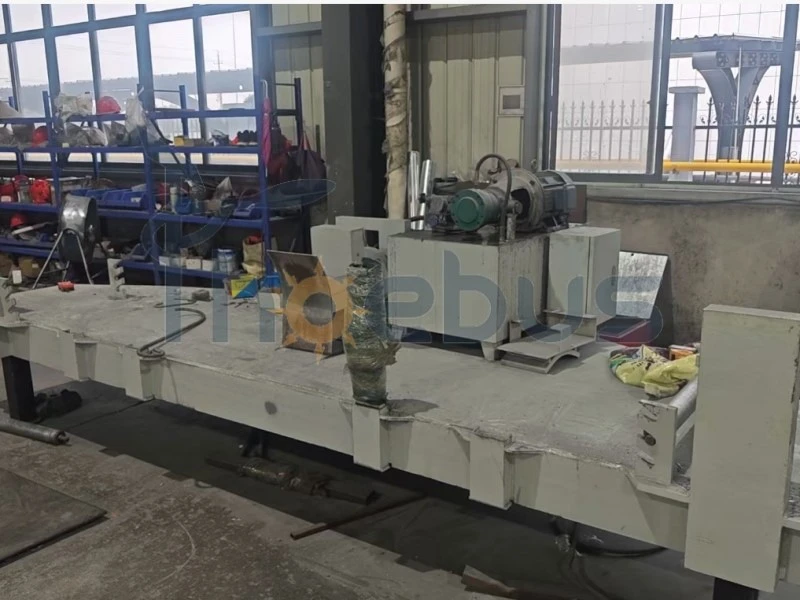
Support saddle Placement: Two rubber coated support saddles are placed underneath the pole shaft, at 1/4 of total pole length away from each end. Never support poles only by the two end flanges; end-point-only support creates artificial sag and distorts test data.
Toolkit: Laser straightness tester, high-tension piano wire, steel measuring tape, dial indicator and marking pen. Dial indicators are reserved for high-mast poles requiring tighter geometric tolerance.
Surface Pre cleaning: Remove welding spatter, sharp burrs and temporary lifting lugs to avoid measurement interference.
Two Complementary Inspection Methods
We adopt two testing solutions for different lamp pole specifications. Laser inspection serves as our primary method for mass produced 6-12 m street light poles; the taut piano wire pull test works as cross verification for large-diameter, extra long high mast poles.
1. Laser Straightness Tester (Primary for Standard Street-Light Poles)
Lay the finished lamp pole horizontally on pre positioned saddles. Ensure the tube rests freely with no external squeezing force.
Mount the laser transmitter on one pole end and project a continuous laser reference line parallel to the central axis of the steel shaft.
Record offset values every 1 meter across the full pole length, logging the maximum clearance between laser baseline and outer pole surface.
Evaluate against acceptance threshold: For regular 6-12 m street light poles, maximum permissible straightness deflection shall not exceed 1 ‰ of total pole length. For instance, a 12 meter lamp pole allows maximum bow deviation of 12 mm, complying with international steel pole inspection norms.
2. Piano-Wire Pull-Test (Secondary Verification for Heavy-Duty Poles)
For oversized poles where laser testing is inconvenient, our QC team applies taut piano-wire testing as cross check:
Secure the inspected pole horizontally on saddles. Fasten high strength piano wire tightly between the two extreme ends of the pole shaft.
Measure gaps between taut wire and pole tube surface segment by segment with a steel ruler. Mark locations of maximum bowing.
Critical note: Maintain moderate wire tension. Over pulling will bend the piano wire itself and generate invalid measurement results.
Non Conformance Disposal for Failed Poles
Once a lamp pole fails straightness tolerance, our quality control department follows formal non conformance handling protocols:
Tag defective poles with red non conformance warning labels and isolate them to a dedicated rejection zone to prevent mixing with qualified finished goods.
Poles with mild deflection are delivered to our hydraulic straightening machine for mechanical correction. Every re-straightened pole must go through complete repeated straightness inspection.
Poles suffering heavy permanent bowing or torsion are rejected directly and will never enter packing procedures, as heavy twisting cannot be reliably eliminated by rework.
After successful correction, the pole undergoes combined re-inspection covering straightness, galvanized-coating thickness, flange perpendicularity and dimensional checks.
Final Safeguards Before Container Loading
Passing straightness inspection is not the final checkpoint. Extra protection is required to preserve pole geometry during long haul sea freight.
We insert spaced foam cushion supports inside shipping containers for long lamp poles, preventing concentrated point pressure that may bend tubes during transit.
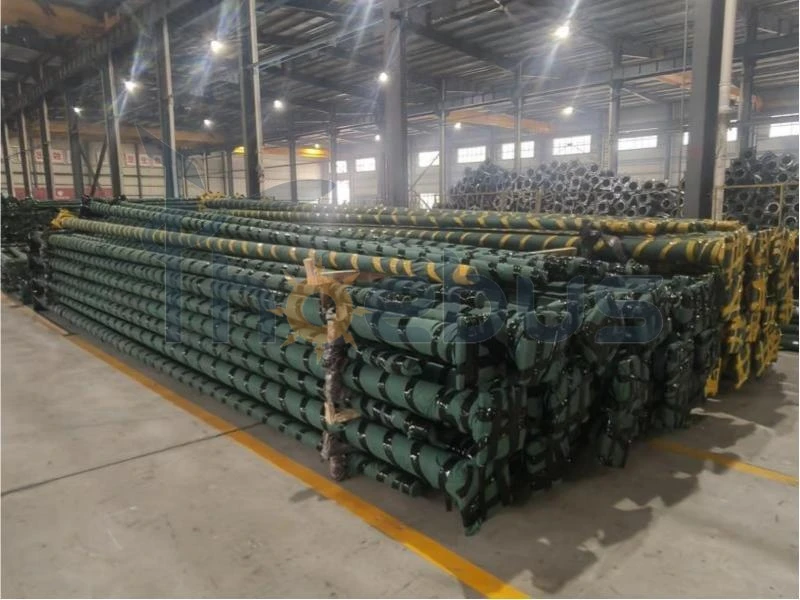
Upon client request, Phoebus Light supplies on-site inspection photos and short video clips from straightness testing as part of pre shipment inspection documentation. Third party inspection agencies such as SGS are warmly welcomed to witness the whole testing workflow inside our factory.
Conclusion
Street light pole straightness inspection acts as a critical quality gate before shipment instead of a post delivery remedy. By implementing inspection after surface finishing, adopting correct supporting layouts and qualified measuring instruments, manufacturers can effectively minimize bent pole complaints for cross border lighting projects.
If you are sourcing hot dip galvanized street light poles, smart city integrated poles or high mast poles, feel free to reach out to Phoebus Light for factory audit, sample requests or customized project quotations.